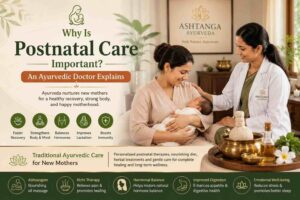
Becoming a mother is a life-changing journey, and recovery deserves just as much care as pregnancy.
The weeks following childbirth, often called the postnatal or postpartum period, are a time when a mother’s body begins to heal while adjusting to the physical and emotional demands of caring for a newborn. From fatigue and body aches to changes in sleep, digestion, and nutrition, recovery looks different for every mother.
Ayurveda views this phase as one of the most important stages in a woman’s life. Instead of focusing only on symptom management, it emphasizes restoring strength, supporting digestion, nourishing the body, and promoting overall wellbeing through personalized care.
At our experienced practitioners provide individualized postnatal care in Dubai, helping new mothers recover naturally with Ayurvedic guidance tailored to their unique needs.
A Mother’s Recovery Is Just as Important as Her Baby’s Care
“Postnatal recovery is not simply about healing after childbirth—it’s about restoring strength, nourishing the body, and supporting long-term wellbeing for motherhood and beyond.”
What Is Postnatal Care?
Postnatal care refers to the support provided to a mother after childbirth to promote physical recovery, emotional wellbeing, and overall health.
The postpartum period generally begins immediately after delivery and continues for several weeks as the body gradually heals.
Effective postnatal care focuses on:
- Physical recovery after childbirth
- Balanced nutrition
- Emotional wellbeing
- Breastfeeding support
- Healthy digestion
- Rest and sleep
- Lifestyle guidance
- Long-term wellness
According to Ayurveda, this phase is an opportunity to restore balance and help the body recover naturally.
Why Is Postnatal Care Important?
Pregnancy and childbirth place significant demands on the body.
During the weeks after delivery, many mothers experience:
| Common Changes | Why Support Matters |
|---|---|
| Fatigue | Energy levels need time to recover |
| Muscle soreness | The body is healing after childbirth |
| Digestive discomfort | Healthy digestion supports recovery |
| Sleep disruption | Newborn care often affects rest |
| Emotional changes | Hormonal shifts can influence mood |
| Nutritional demands | Breastfeeding and recovery increase nutritional needs |
Receiving appropriate care during this period may support overall recovery and wellbeing.
How Does Ayurveda Support Postnatal Recovery?
Ayurveda recognizes that every woman recovers differently.
Rather than offering a one-size-fits-all approach, Ayurvedic practitioners assess factors such as body constitution (Prakriti), digestion (Agni), lifestyle, sleep, nutrition, and individual recovery goals before recommending a personalized wellness plan.
Postnatal Ayurvedic care may include:
- Personalized nutritional guidance
- Lifestyle recommendations
- Daily routines that support recovery
- Gentle Ayurvedic therapies when appropriate
- Stress management practices
- Support for healthy digestion
- Guidance on adequate rest
The goal is to help mothers regain strength gradually while supporting overall physical and emotional wellbeing.
Common Postpartum Challenges
Every recovery journey is unique, but some concerns are commonly experienced after childbirth.
| Challenge | Ayurvedic Wellness Focus |
|---|---|
| Low energy | Nourishing diet and rest |
| Digestive discomfort | Supporting healthy digestion |
| Poor sleep | Relaxation and balanced routines |
| Body aches | Gentle recovery practices |
| Stress | Mind-body wellness |
| Nutritional imbalance | Personalized dietary guidance |
Ayurveda encourages addressing these challenges through sustainable lifestyle habits rather than quick fixes.
Postnatal Nutrition: Why It Matters
Nutrition plays a central role in recovery after childbirth.
A balanced diet helps provide the energy and nutrients needed for healing and day-to-day wellbeing.
General postnatal nutrition principles include:
- Eating freshly prepared meals
- Staying well hydrated
- Including wholesome sources of protein
- Eating fibre-rich foods
- Choosing healthy fats
- Avoiding highly processed foods where possible
Ayurvedic nutrition is personalized, recognizing that each mother’s needs may differ based on her health, digestion, and stage of recovery.
👉 Related Reading: What Should You Eat After Delivery? An Ayurvedic Guide to Postnatal Nutrition
The Importance of Rest During Recovery
Modern lifestyles often encourage mothers to return to daily responsibilities quickly.
Ayurveda encourages adequate rest during the postnatal period because recovery affects long-term health.
Simple daily habits include:
- Sleeping whenever possible
- Accepting support from family members
- Avoiding excessive physical strain
- Maintaining a consistent daily routine
- Practising gentle breathing or relaxation exercises
Rest is an important part of recovery, not a sign of weakness.
Lifestyle Habits That Support Recovery
Small daily habits can contribute to overall wellbeing during the postpartum period.
| Healthy Habit | Potential Benefit |
|---|---|
| Balanced meals | Supports nutritional needs |
| Staying hydrated | Helps maintain overall health |
| Gentle movement (when medically appropriate) | Supports mobility and circulation |
| Stress management | Encourages emotional wellbeing |
| Regular sleep routine | Supports recovery |
| Follow-up healthcare visits | Monitors postpartum health |
Supporting Your Wellbeing with Ayurveda
Ayurveda encourages mothers to focus on long-term wellness rather than rushing recovery.
Personalised care may help support:
- Healthy digestion
- Balanced nutrition
- Emotional wellbeing
- Daily energy
- Better sleep habits
- Overall recovery after childbirth
👉 Continue Reading: Common Postpartum Challenges and How Ayurveda Supports Recovery Naturally
When Should You Consult an Ayurvedic Practitioner After Childbirth?
Every mother’s recovery journey is different. While many physical changes are a normal part of postpartum healing, some situations may benefit from professional guidance.
You may consider an Ayurvedic consultation if you:
- Experience prolonged fatigue that affects daily life.
- Feel your recovery is slower than expected.
- Need personalized dietary guidance after delivery.
- Want support for healthy digestion and overall wellbeing.
- Are looking for a holistic recovery plan tailored to your body constitution.
A qualified Ayurvedic practitioner can assess your health, lifestyle, and recovery goals to recommend a personalized wellness plan.
👉 Related Reading: When Should You Visit an Ayurvedic Doctor After Childbirth?
Why Choose Ayurveda for Postnatal Care?
Ayurveda recognizes that recovery extends beyond physical healing. The postpartum period is an opportunity to restore strength, rebuild energy, and establish healthy routines that support long-term wellbeing.
Personalized Ayurvedic postnatal care may include:
- Individual nutritional guidance
- Lifestyle recommendations
- Stress management techniques
- Gentle Ayurvedic therapies, when appropriate
- Guidance on healthy daily routines
- Support for overall maternal wellness
By addressing the whole person rather than isolated symptoms, Ayurveda encourages a balanced and sustainable recovery.
“The postnatal period is a time to restore—not rush. Ayurveda encourages mothers to heal gradually through balanced nutrition, proper rest, mindful routines, and personalized care that supports long-term wellbeing.”
Reviewed by an Ayurvedic Practitioner
This article is intended for educational purposes only and should not replace professional medical advice. Every pregnancy, childbirth, and recovery journey is unique. If you experience heavy bleeding, persistent fever, severe pain, signs of infection, chest pain, shortness of breath, or symptoms of postpartum depression, seek immediate medical care from a qualified healthcare provider.
At Ashtanga Ayurveda Dubai, our practitioners provide personalized Ayurvedic consultations that consider your body constitution, lifestyle, digestion, nutritional needs, and overall recovery goals to support safe and holistic postpartum wellness.
Book Your Postnatal Wellness Consultation
Recovering after childbirth is a journey that deserves personalised care and attention.
At Ashtanga Ayurveda, we provide individualised Ayurvedic postnatal wellness plans that focus on nutrition, digestion, rest, and overall recovery, helping new mothers regain strength naturally.
Whether you’re adjusting to motherhood for the first time or looking for holistic support after delivery, our experienced practitioners are here to guide you every step of the way.
Our Postnatal Wellness Programs Support:
✔ Personalised postnatal nutrition guidance
✔ Healthy digestion and energy support
✔ Stress management and relaxation
✔ Lifestyle guidance for new mothers
✔ Holistic recovery after childbirth
✔ Long-term maternal wellbeing
📞 Book Your Consultation Today
📞 Call: +971 50 617 6013
🌐 Website: https://ashtangaayurveda.ae/
Take the next step toward a healthier and more balanced postpartum recovery with personalized Ayurvedic care at Ashtanga Ayurveda – Ayurvedic Clinic in Dubai.
FAQs
What is postnatal care in Ayurveda?
Ayurvedic postnatal care focuses on supporting a mother’s recovery after childbirth through personalized nutrition, healthy routines, rest, and lifestyle guidance tailored to her individual needs.
How long does postnatal recovery take?
Recovery varies for every mother. While many women recover over several weeks, complete physical and emotional recovery may take longer depending on individual health and the type of delivery.
Why is nutrition important after childbirth?
A balanced diet provides the nutrients and energy needed for healing, breastfeeding, and overall wellbeing during the postpartum period.
When should I visit an Ayurvedic practitioner after delivery?
If you’re experiencing prolonged fatigue, digestive discomfort, difficulty adjusting to postpartum changes, or would like personalized wellness guidance, an Ayurvedic consultation may be beneficial.
Is Ayurvedic postnatal care suitable after a C-section?
Recovery plans should always be personalized. Women recovering from a Caesarean section should follow their obstetrician’s advice first, and any Ayurvedic therapies should be introduced only when medically appropriate.